


A serious crash can leave you with more questions than answers. One moment, you are driving through Pittsburgh traffic, heading to work, picking up your child, or running an ordinary errand. The next, another driver runs a red light, drifts into your lane, rear-ends you, or turns directly in front of you.
After the shock wears off, one question can be hard to ignore: Was the other driver on their phone?
That question matters. If you are hurt, your focus is probably on your pain, your car, your missed work, your medical appointments, and the insurance company calling before you even understand the full extent of your injuries. At the same time, you may be worried that the other driver will deny being distracted or that the insurance company will treat your suspicions like they do not matter.
At Dallas W. Hartman P.C., we understand why this feels so frustrating. You should not have to prove the case alone while you are trying to recover. In a Pennsylvania car accident claim, evidence can make the difference between a disputed story and a clear picture of what happened. This article explains what distracted driving can look like, why establishing phone use matters after a crash, what evidence can help prove it, and why fast action is important when the other driver was not paying attention.
Think the Other Driver Was Distracted? What Pennsylvania Law Says About Phone Use Behind the Wheel
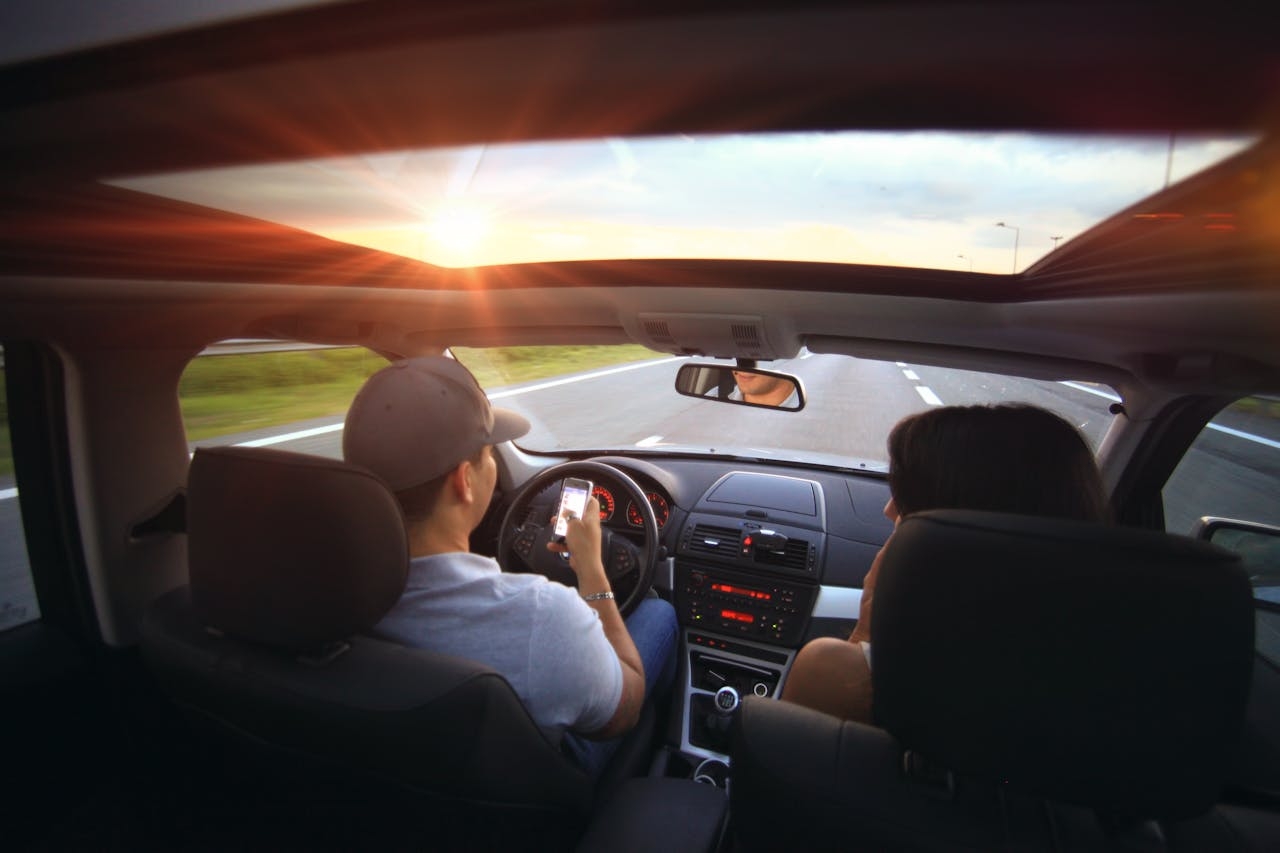
Many people think of distracted driving as texting behind the wheel, but phone-related distraction can take many forms. A driver can be distracted while reading a message, typing a reply, scrolling social media, reaching for a phone, checking a notification, taking a video, changing music, or holding a phone during a call.
Pennsylvania’s hands-free law, known as Paul Miller’s Law, prohibits drivers from using an interactive mobile device while driving as a primary offense. The law took effect on June 5, 2025, with written warnings issued during the first year. Beginning June 5, 2026, violations carry a $50 fine, plus court costs and other fees.
For injured drivers and passengers, the legal update is only part of the story. Pennsylvania has long prohibited texting while driving, and Paul Miller’s Law now addresses handheld device use more broadly, including when a vehicle is temporarily stopped in traffic or at a red light. In a car accident claim, the practical question is whether the other driver was focused on the road when it mattered. If a driver was looking at a screen, holding a device, or letting a phone pull their attention away from traffic, that conduct can become important when determining how the crash happened.
For someone hurt in a crash, the legal label matters less than what the distraction caused the driver to do. Did they fail to see you? Did they miss stopped traffic? Did they drift out of their lane or react too late? A driver looking away for even a moment can miss brake lights on I-376, traffic on Route 28, a pedestrian near Downtown Pittsburgh, or a vehicle stopped ahead on Liberty Avenue.
When that distraction causes a crash, you should not be left paying the price.
Why Evidence of Distracted Driving Can Change the Direction of Your Car Accident Claim
After a crash, the insurance company will look closely at fault, injuries, and the evidence supporting your car accident claim. The adjuster might argue that both drivers share blame, that the collision happened too quickly to know what caused it, or that there is no solid proof the other driver was distracted.
Evidence can change that conversation. If the other driver was using a phone, looking down, or otherwise distracted before impact, those facts can support a negligence claim. They can also help push back if the insurance company tries to shift blame onto you or make the crash seem unavoidable.
That type of evidence can be especially important in crashes where the other driver’s explanation does not match what happened, including:
- Rear-end crashes
- Intersection collisions
- Lane-departure accidents
- Pedestrian and bicycle accidents
- Truck and commercial vehicle crashes
- Multi-vehicle collisions
- Crashes where the other driver says they “never saw” you
When a driver claims they did not see you, the next question should be, “Why?” If the roadway, traffic, and witness evidence show the driver had time to react, distraction could explain why they did not.
How Do You Prove the Other Driver Was on the Phone?
Distracted driving is not always obvious after a crash. By the time police arrive, the phone may be out of sight, and the driver may deny using it or insist they were paying attention. That does not mean the truth is out of reach.
The strongest distracted driving claims are usually built from several pieces of evidence that point in the same direction. The goal is to reconstruct what the driver was doing in the seconds before impact, especially when the driver now denies being distracted.
Phone Records and Digital Evidence
Phone records can help show whether a driver was making calls or sending messages around the time of a crash. Other digital evidence, including app activity, can also become relevant when the facts support a closer look at what the driver was doing.
An injured person usually cannot simply call the other driver’s phone company and ask for this information. In a legal claim, however, these records can become important when the facts support seeking them.
Waiting can make this harder. If there is a real reason to believe the other driver was using a phone, we want to act before records, footage, and other evidence become more difficult to obtain.
Witnesses Who Saw What You Could Not
Witnesses often notice details that an injured driver or passenger misses in the shock of the crash. Someone in another vehicle may have seen the driver looking down. A pedestrian may have noticed the phone in the driver’s hand. A passenger could have heard or seen something that explains why the driver failed to react.
After a crash, witnesses often leave quickly. Memories fade. Contact information gets lost. If you can safely get a witness’s name and phone number before the scene clears, that information can be important later.
Police Reports and Crash Details
The police report is often one of the first records the insurance company reviews after a crash. It can preserve what each driver said at the scene, whether witnesses noticed signs of distraction, where the vehicles ended up, and whether the officer issued any citations. A notation about phone use, distracted driving, or a related traffic violation can help connect the other driver’s conduct to the crash.
But a police report is not the whole case. In the confusion after a collision, important facts can be missed. A witness might leave before speaking with the officer. You might be in pain, shaken, or on your way to the hospital before you can fully explain what happened. If the report leaves out something important, including your concern that the other driver was on the phone, that does not mean the evidence stops there.
Traffic Cameras, Business Cameras, and Doorbell Cameras
In Pittsburgh and nearby communities, crashes can be captured by traffic cameras, business security systems, parking lot cameras, apartment buildings, dashcams, or doorbell cameras. Video can show whether a driver failed to brake, drifted between lanes, looked down, or reacted too late.
The problem is that video does not always last long. Some businesses overwrite footage within days or weeks. If a nearby camera captured the crash, acting quickly can make the difference between preserving that footage and losing it.
Vehicle Data and Physical Crash Evidence
Modern vehicles can contain data that helps show speed, braking, acceleration, and other actions before impact. Physical evidence can also matter, including vehicle damage, debris, impact points, skid marks, roadway conditions, and final resting positions.
This evidence helps answer a practical question: did the other driver respond like someone who was watching the road, or did they miss the danger because their attention was somewhere else?
What Should You Do Right Away if You Think the Other Driver Was Distracted?
If you were hurt in a crash and believe the other driver was on the phone, your first priority is your health. Get medical care, even if you are not sure how serious your injuries are. Pain can worsen after the adrenaline wears off, and medical records help document what happened to you.
Next, make sure the crash is reported. Tell the responding officer what you saw, including whether the other driver was looking down, holding a phone, or appeared distracted. If a witness told you the driver was on a phone, tell the officer that, too.
If you can do so safely, take photos of the vehicles, roadway, traffic signals, skid marks, nearby cameras, and anything else that helps show how the crash happened. Get witness contact information before people leave the scene.
You should also be careful with insurance company calls. The adjuster may sound helpful, but the insurance company’s job is to evaluate and limit what it pays. A recorded statement, casual comment, or rushed settlement can create problems later. Before you give a statement or sign anything, it is wise to understand your rights.
Do Not Count on the Insurance Company to Build the Case for You
Here is the difficult truth: the insurance company is not responsible for building the strongest version of your claim. If the other driver denies phone use, the insurer may not look deeper unless you present them with evidence that tells a different story.
That is why legal representation can make a difference. We know what evidence to look for, how quickly certain evidence can disappear, and how insurance companies evaluate distracted driving claims. Our goal is to protect you from being blamed, pressured, or underpaid while you are trying to recover.
A distracted driving crash is not just about proving that someone had a phone in the vehicle. It is about proving that the driver failed to pay attention, that their failure caused the crash, and that the crash caused real harm to you or your loved one.
Injured by a Distracted Driver in Pittsburgh or Western Pennsylvania?
If you or your loved one was hurt because another driver was looking at a phone, holding a device, or not paying attention, you do not have to figure out the next steps alone. You may be dealing with medical bills, missed paychecks, pain, transportation problems, and the stress of not knowing what your case is worth.
At Dallas W. Hartman P.C., we fight for injured people across Pittsburgh and Western Pennsylvania. We can review what happened, investigate whether distracted driving played a role, preserve important evidence, handle communications with the insurance company, and pursue the compensation available under Pennsylvania law.
If you believe another driver’s phone use caused your crash, do not wait for the insurance company to decide what your case is worth. Contact Dallas W. Hartman P.C. today. Your initial consultation is free, and you pay no attorney’s fees or costs unless we obtain compensation for you. To get started, use our online contact form.
Disclaimer: The articles on this blog are for informative purposes only and are no substitute for legal advice or an attorney-client relationship. If you are seeking legal advice, please contact our law firm directly.