


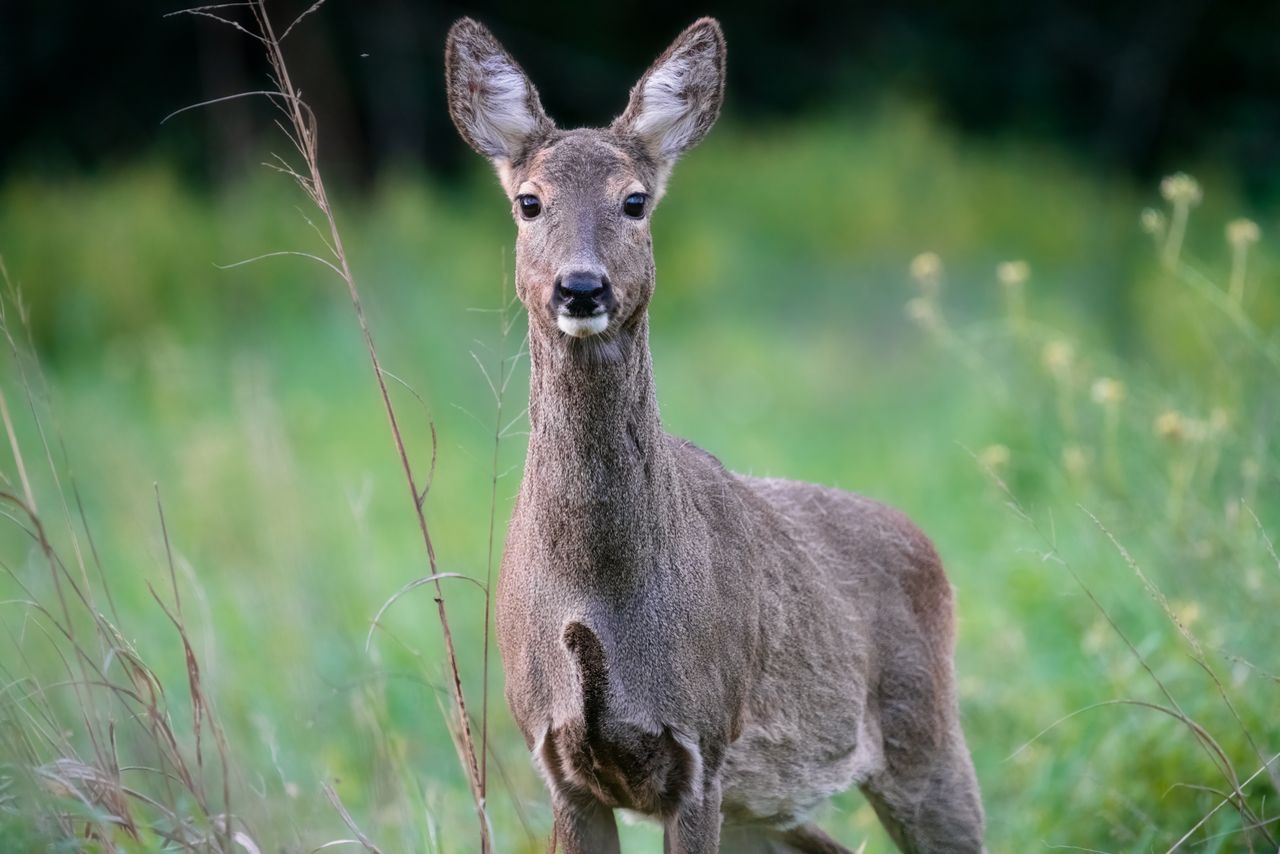
A deer appears in the road with almost no warning. The driver ahead of you brakes hard. An oncoming vehicle swerves across the center line. Or the person driving the car you are riding in jerks the wheel, loses control, and crashes.
Now you are dealing with injuries and trying to understand whether this was simply an unavoidable deer accident or whether another driver's actions also played a role.
That question cannot be answered just by pointing to the deer. What the drivers were doing before it appeared, how they reacted, and what the evidence shows about the moments leading up to the collision can all matter when fault is being determined.
If you were seriously injured in a car accident involving a deer, understanding how fault is evaluated can help you make sense of what happened and what questions still need to be answered.
Does a Deer in the Road Mean No Driver Is at Fault?
Not necessarily. The fact that a deer suddenly entered the roadway does not, by itself, answer whether a driver was responsible for the crash.
Sometimes a deer enters the roadway so suddenly that a collision happens even though the driver was traveling appropriately and reacted reasonably under the circumstances.
Other crashes are more complicated.
Suppose another driver is following your vehicle too closely when a deer appears. You brake, and the vehicle behind you cannot stop in time.
Or an oncoming driver is traveling too fast for the conditions, swerves sharply to avoid a deer, crosses the center line, and strikes your vehicle.
A driver approaching a curve too quickly may also have less time and space to react when a deer suddenly appears. If that driver swerves and enters another lane or loses control, the driver's speed and positioning before the deer appeared can become part of the fault analysis.
In each of these situations, the deer may have created the immediate danger, but the driver's conduct leading up to the collision can still matter.
That is why determining fault requires looking beyond the fact that a deer was in the road and examining how the crash actually developed.
Can a Driver Still Be at Fault for How They Reacted to a Deer?
Yes. A driver may have only seconds to respond when a deer suddenly enters the roadway, but that does not mean every reaction is automatically considered reasonable.
The details matter.
Pennsylvania law requires drivers to travel at a speed that is reasonable for the conditions and hazards they encounter. An investigation can therefore look at how fast the vehicle was traveling, how much distance the driver left between vehicles, whether the driver braked or swerved, the condition of the road, visibility, traffic, and where the vehicles ended up after impact.
This is especially relevant during the fall, when PennDOT warns drivers to watch for increased deer movement across Pennsylvania.
The location can matter too.
A driver traveling on an open stretch of I-80 can face a different situation from someone driving along a winding road outside New Castle, Hermitage, Greenville, or Grove City. Curves, hills, shoulders, roadside vegetation, lighting, and traffic can all affect how much time a driver had to respond.
The question is not whether the driver chose the perfect response in hindsight. Pennsylvania law recognizes that someone confronted with a sudden and unexpected danger may have very little time to react, so the driver's response has to be considered in light of those circumstances.
The evidence can still matter in determining whether the driver was operating reasonably before the danger appeared and whether the driver's actions contributed to the crash.
What If Another Driver Swerved Into Your Lane?
If another driver swerved into your lane, saying that a deer caused the emergency does not by itself answer whether that driver was responsible for the collision.
Imagine that you are traveling in your lane when an approaching driver sees a deer, crosses the center line, and causes a head-on collision.
The other driver may say the deer left no choice.
That explanation still needs to be tested against what actually happened.
Was the other driver traveling at an appropriate speed before the deer appeared? What options did that driver have before crossing into oncoming traffic? Did the vehicle leave its lane before or after the driver saw the animal? Were there witnesses? Does the driver's account match the physical evidence?
Those questions can help distinguish between a collision that occurred despite a reasonable response to a sudden hazard and one in which the other driver's speed, positioning, or reaction also contributed to the crash.
That distinction becomes especially important when the people involved remember the same few seconds differently.
What If You Were a Passenger When the Driver Swerved?
Passengers can find themselves in an especially confusing position after a deer-related crash.
You may have had no control over how fast the vehicle was traveling, how closely it followed another car, or whether the driver chose to brake or swerve.
If you are seriously injured, the investigation can look at whether another driver contributed to the crash, whether the person driving your vehicle did, or whether the collision occurred despite reasonable driving under the circumstances.
You do not have to sort that out on your own before asking about your legal options.
The fact that you know and trust the person who was driving can make the situation uncomfortable, particularly when that person is a friend or family member. A claim involving someone you know can also raise questions about what auto insurance coverage applies and how the claim would actually be handled.
Reviewing the available coverage and the evidence can help you understand your options without making assumptions based only on your personal relationship with the driver.
What Insurance May Pay After a Deer-Related Crash?
Who ultimately pays can depend on how the crash happened, who was legally responsible, and what insurance coverage is available.
Pennsylvania auto insurance generally provides first-party medical benefits for eligible people with covered medical expenses after a motor vehicle accident. If another driver was legally responsible for the collision, that driver's bodily injury liability coverage may also become relevant to legally recoverable injury-related losses, while property damage liability coverage may apply to damage the driver caused to another vehicle or other property.
Coverage for damage to your own vehicle can depend on what actually happened.
If your vehicle strikes a deer, the damage is generally handled through comprehensive coverage if you purchased it. If you swerve to avoid the deer and instead collide with another vehicle or object, collision coverage may be the coverage that applies to damage to your own vehicle, depending on your policy.
That is why determining fault and reviewing the available insurance are related but separate parts of evaluating a deer-related crash. The fact that a deer triggered the sequence does not, by itself, determine whether another driver was legally responsible or which coverage may apply.
What Evidence Can Help Reconstruct a Deer-Related Crash?
A deer-related crash can unfold too quickly for anyone involved to have a complete picture of what happened.
That is why evidence from the roadway, vehicles, witnesses, and available recordings can become important.
Depending on the collision, useful information can include:
- Photographs of the roadway, shoulder, curves, or nearby vegetation
- Dashcam or surveillance footage
- Witness statements
- Police observations
- Vehicle damage and final resting positions
- Electronic vehicle data
- Evidence showing whether and where a vehicle struck the deer
- Weather, lighting, and visibility conditions
- Statements the drivers made shortly after the crash
At Dallas W. Hartman P.C., we can review these pieces of evidence together instead of relying on one driver's account of what happened. The goal is to understand how the crash developed and what each driver was doing before the collision.
Preserving that information early can matter because memories fade, roadway conditions change, and recordings may not remain available indefinitely.
The evidence can then help determine whether the collision occurred despite reasonable driving or whether another driver's speed, following distance, lane movement, or reaction contributed to what happened.
Can More Than One Person Be at Fault for the Crash?
Yes. More than one person can share fault for the same crash.
Pennsylvania follows a comparative-negligence rule. Being partly at fault does not automatically prevent an injured person from recovering damages. Recovery is still possible when the injured person's negligence is not greater than the causal negligence of the defendant or defendants from whom recovery is sought.
When recovery is allowed, and the injured person is assigned a percentage of fault, the damages are reduced by that percentage.
This becomes important when the evidence shows that more than one person's actions contributed to the same collision.
Responsibility does not always have to fall entirely on one person. In a multi-vehicle crash, the facts can lead to different percentages of fault being attributed to the people whose actions contributed to the injuries.
That is why identifying the complete sequence of events matters. The question is not simply who reacted to the deer, but whose actions legally contributed to the collision and the resulting harm.
What Should You Do After a Deer-Related Car Crash?
If you are injured, your health comes first.
Beyond medical care, try to preserve whatever information is reasonably available to you. Photographs, the police report, insurance information, names of witnesses, and any dashcam footage can become important later.
If you remember something specific about the moments before impact, such as seeing the other vehicle drift, brake late, follow closely, or enter your lane, write it down while it is fresh.
You do not need to reconstruct the collision yourself.
An attorney can investigate the evidence, compare it with the explanations given after the crash, and assess what the available facts show about how the collision occurred.
Injured in a Deer-Related Crash in Western Pennsylvania?
If you were hurt after another driver swerved, crossed into your lane, rear-ended your vehicle, or lost control while trying to avoid a deer, the important questions often come down to what happened before the collision and what the evidence shows about each driver's actions.
At Dallas W. Hartman P.C., we can examine the crash evidence, insurance coverage, roadway conditions, witness accounts, and the actions of the drivers involved to help you understand how the collision occurred and who may bear responsibility.
From our New Castle office and locations throughout Western Pennsylvania, we represent injured people in Lawrence County, Mercer County, Butler County, and surrounding communities.
If you have questions about a deer-related crash, you can contact Dallas W. Hartman P.C. to discuss what happened and what legal options may be available based on the facts of your situation.
Disclaimer: The articles on this blog are for informational purposes only and are no substitute for legal advice or an attorney-client relationship. If you are seeking legal advice, please contact our law firm directly.