
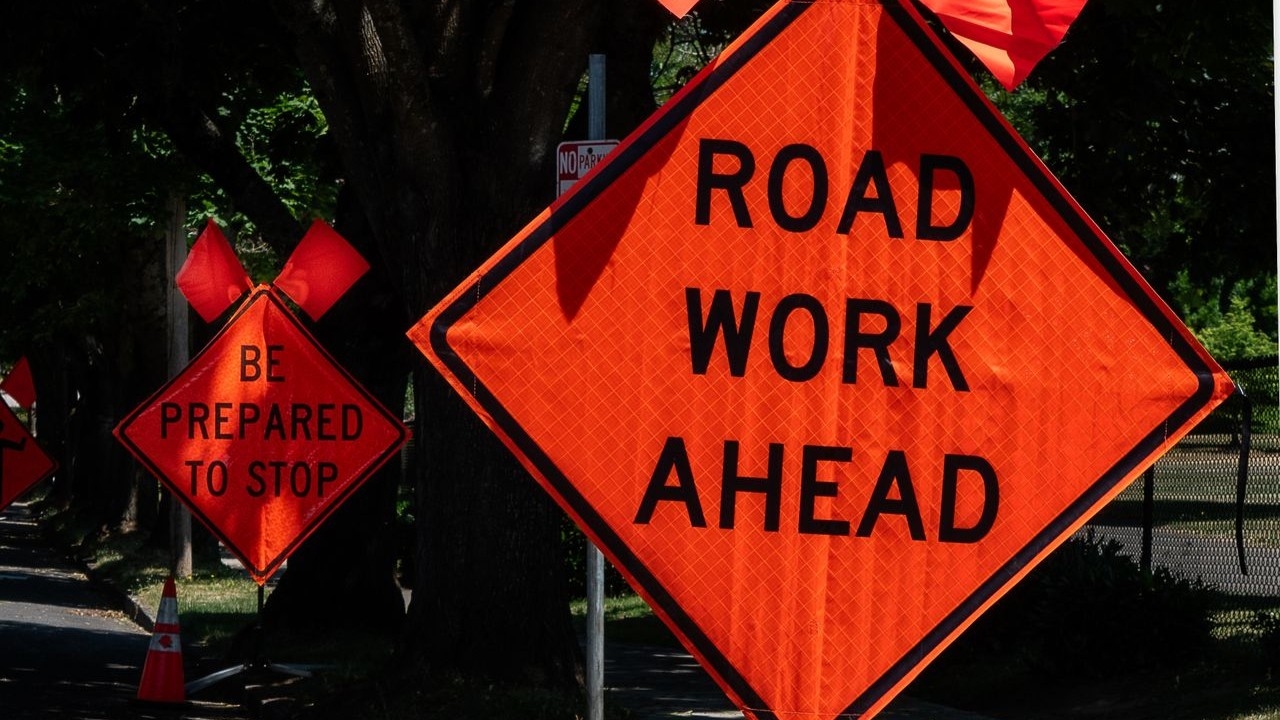
You were driving through a highway work zone when traffic suddenly slowed, a lane shifted, or vehicles were forced to merge. Maybe another driver followed too closely and hit you from behind. Maybe a vehicle moved into your lane as the roadway narrowed. Or maybe cones, barriers, construction equipment, or an unexpected change in the traffic pattern left you with little time to react.
Now you are dealing with injuries, medical treatment, damage to your vehicle, and questions about what caused the crash.
A work-zone collision can involve more than the conduct of the drivers on the road. Depending on what happened, the investigation may also need to consider how traffic was routed through the construction area, whether required traffic-control devices were in place, who was performing the work, and which entity had responsibility for the roadway or project.
In Pennsylvania, determining who could be responsible begins with identifying the specific act or condition that led to the crash.
Was Another Driver Responsible for the Work-Zone Crash?
Sometimes the work zone is where the collision happened, but another driver's conduct is what caused it.
Traffic can slow or stop quickly near lane closures. Vehicles may have to merge into a single lane, follow temporary pavement markings, or move through a narrower travel area. Drivers still have to respond safely to those conditions.
The investigation might ask:
Was the driver following too closely when traffic backed up? Did someone speed through a reduced or changing traffic pattern? Did a driver ignore a flagger, sign, or lane closure? Did another vehicle make an unsafe lane change as two lanes merged? Was the driver distracted when traffic ahead slowed?
PennDOT tells motorists traveling through work zones to obey the posted speed limit, pay attention to signs and flaggers, maintain a safe following distance, and avoid distractions. Pennsylvania law also requires drivers in designated construction and maintenance areas to yield to authorized vehicles and pedestrians actually engaged in highway work under specified circumstances.
If another driver's conduct caused the collision, the fact that it happened in a work zone does not eliminate that driver's potential responsibility.
Could the Way the Work Zone Was Set Up Matter?
Yes. A work zone changes the roadway drivers normally expect to encounter.
Travel lanes can shift. Shoulders may disappear. Traffic may be redirected across the roadway or alongside barriers. Drivers may have to respond to advance warning signs, temporary signals, flaggers, construction vehicles, or lane closures.
Pennsylvania law requires people performing work on or near a roadway that may create hazards to use traffic-control devices in accordance with PennDOT's rules for maintaining and protecting traffic. The statute treats traffic control as an essential part of highway construction, utility work, maintenance operations, and incident management.
That does not mean a contractor is responsible simply because a crash happened inside a construction zone.
The question is more specific: Did something about the work-zone setup or operation create or contribute to the dangerous condition that led to the collision?
For example, an investigation may examine whether traffic-control devices were properly positioned, whether a lane closure gave drivers adequate notice, whether temporary markings clearly directed traffic, whether equipment obstructed a driver's view, or whether the traffic pattern in place at the time matched the plan for that stage of the project.
Could a Construction Contractor or Subcontractor Be Responsible?
Potentially, but responsibility depends on what that company was hired to do and what actually happened.
Highway projects can involve general contractors, subcontractors, engineering firms, utility companies, traffic-control companies, and other businesses performing different parts of the work.
A contractor responsible for maintaining traffic through the project, for example, presents a different question from a company whose employees were performing work away from the travel lanes.
Pennsylvania's work-zone law also provides that PennDOT may assess liquidated damages against a contractor or subcontractor that fails to comply with department specifications for controlling traffic within a work zone. That does not, by itself, establish civil liability to someone injured in a crash. But identifying which company was assigned responsibility for traffic control, and whether its conduct contributed to the conditions surrounding the collision, can be important to the liability analysis.
The useful questions are concrete:
Who placed and maintained the cones, barriers, signs, or temporary signals? Who was responsible for the lane configuration when the crash occurred? Had the traffic pattern recently changed? Were workers or construction vehicles entering the travel lane?
Identifying each company's actual role can help determine whether conduct connected to the construction work belongs in the liability analysis.
What if the Crash Involved a Construction Vehicle?
A dump truck, paving vehicle, utility truck, pickup, or other work vehicle can create a separate issue when it enters, leaves, or moves within an active highway project.
If a work vehicle pulled into traffic, crossed a travel lane, backed into the roadway, or otherwise became involved in the collision, the driver's actions need to be examined just as they would in another vehicle crash.
The driver's employer may also become relevant when the person was performing job duties at the time of the collision. That does not mean an employer is automatically responsible whenever an employee causes a crash. The driver's employment relationship, what the driver was doing, and the circumstances of the collision all matter.
This is different from a claim based on the design or setup of the work zone. One concerns how a particular vehicle was being operated; the other concerns how traffic was being managed through the construction project.
Could PennDOT or Another Government Entity Be Responsible?
This question requires particular care.
A highway project may involve PennDOT, the Pennsylvania Turnpike Commission, a municipality, or another public entity. But the fact that a government agency owns, controls, or is improving a roadway does not automatically make it legally responsible for a crash there.
Pennsylvania applies different immunity rules depending on the type of government entity involved. Commonwealth parties are generally protected by sovereign immunity unless the requirements for a waiver are satisfied and the claim falls within a statutory exception. Those exceptions include, among other categories, certain claims involving Commonwealth vehicles and dangerous conditions of Commonwealth real estate or highways.
Local agencies are governed by separate governmental-immunity rules, with their own requirements and statutory exceptions. Those exceptions can include vehicle liability and, when the required conditions are met, certain dangerous conditions involving streets or traffic controls.
There can also be special procedural requirements for claims against government units. Under Pennsylvania law, a person preparing to bring a covered claim for personal injury or property damage against a government unit generally must provide written notice within six months, subject to statutory qualifications and exceptions.
For that reason, a work-zone crash involving a state or local roadway should not be analyzed simply by asking who owns the road. The particular condition involved, which entity controlled it, the applicable immunity provisions, and the procedural requirements for the claim all need to be considered.
What Evidence Can Identify Who Controlled the Work Zone?
One of the challenges after a highway construction crash is that the scene may not look the same for long.
Cones can be moved. Lanes can reopen. Equipment can leave. Temporary signs may be relocated as the project progresses.
That makes work-zone-specific information especially important.
Depending on the crash, relevant evidence can include photographs or video showing the lane configuration, signs, barriers, cones, temporary pavement markings, construction equipment, and visibility at the time of the collision. Witness information and available dashcam or roadway footage may also help establish how traffic was moving.
The investigation may also need records that an injured driver would not ordinarily have, such as traffic-control plans, project records, contractor information, inspection documentation, work logs, or records showing when a particular lane configuration was placed or changed.
At Dallas W. Hartman P.C., we can investigate which companies and public entities were involved in the project and identify records that may help explain who controlled the conditions present when the crash occurred.
What if You Were Working in the Construction Zone When You Were Injured?
A highway worker injured in the work zone can face a different legal framework from a motorist passing through it.
If you were injured in the course of your employment, Pennsylvania workers' compensation can provide benefits without requiring you to prove that someone else was at fault, subject to the requirements of the Workers' Compensation Act.
If the injury was caused by a legally responsible third party, such as an unrelated motorist, Pennsylvania law may also permit a claim against that third party, subject to the rules that apply when workers' compensation benefits and third-party recovery overlap. Whether a third-party claim exists in a particular work-zone case depends on who caused the injury and the relationships among the people and companies involved.
That distinction matters because a workers' compensation claim and a claim against a negligent third party are not the same type of case.
What Should You Do After a Pennsylvania Work-Zone Crash?
Start with your health and safety. Get appropriate medical care and follow the treatment instructions you receive.
When possible, preserve information showing the work zone as it existed when the crash happened. Photographs of the lane layout, temporary signs, barriers, pavement markings, construction vehicles, and surrounding roadway can be particularly useful because those conditions may change as work continues.
Keep the crash report information, photographs of the vehicles, medical records, insurance communications, and the names of any witnesses you were able to identify.
Write down what you remember about the traffic pattern while it is still fresh. If the lane had shifted, a sign was difficult to see, traffic was being directed by a flagger, a construction vehicle entered the roadway, or another driver made a sudden move, those details can help focus the later investigation.
You do not need to decide which company or government entity was legally responsible before asking for help. In a work-zone case, identifying the right parties can itself be an important part of the investigation.
Injured in a Highway Work Zone in Western Pennsylvania?
A highway work-zone crash can look straightforward at first: traffic slowed, a vehicle hit you, and you were injured.
But the reason traffic slowed, how the lanes were configured, what another driver did, whether a work vehicle was involved, and who controlled the traffic pattern can change the liability analysis.
At Dallas W. Hartman P.C., we represent people injured in vehicle accidents throughout Western Pennsylvania. We can investigate how the collision occurred, identify the contractors, companies, drivers, or public entities whose conduct needs to be examined, preserve relevant evidence, evaluate the insurance coverage involved, and explain the legal options available under the circumstances.
If you were injured while driving through a Pennsylvania highway work zone, contact Dallas W. Hartman P.C. to discuss what happened and the factors that may affect your claim.
Disclaimer: Results may vary depending on your particular facts and legal circumstances. The articles on this blog are for informational purposes only and are no substitute for legal advice or an attorney-client relationship. If you are seeking legal advice, please contact our law firm directly.