

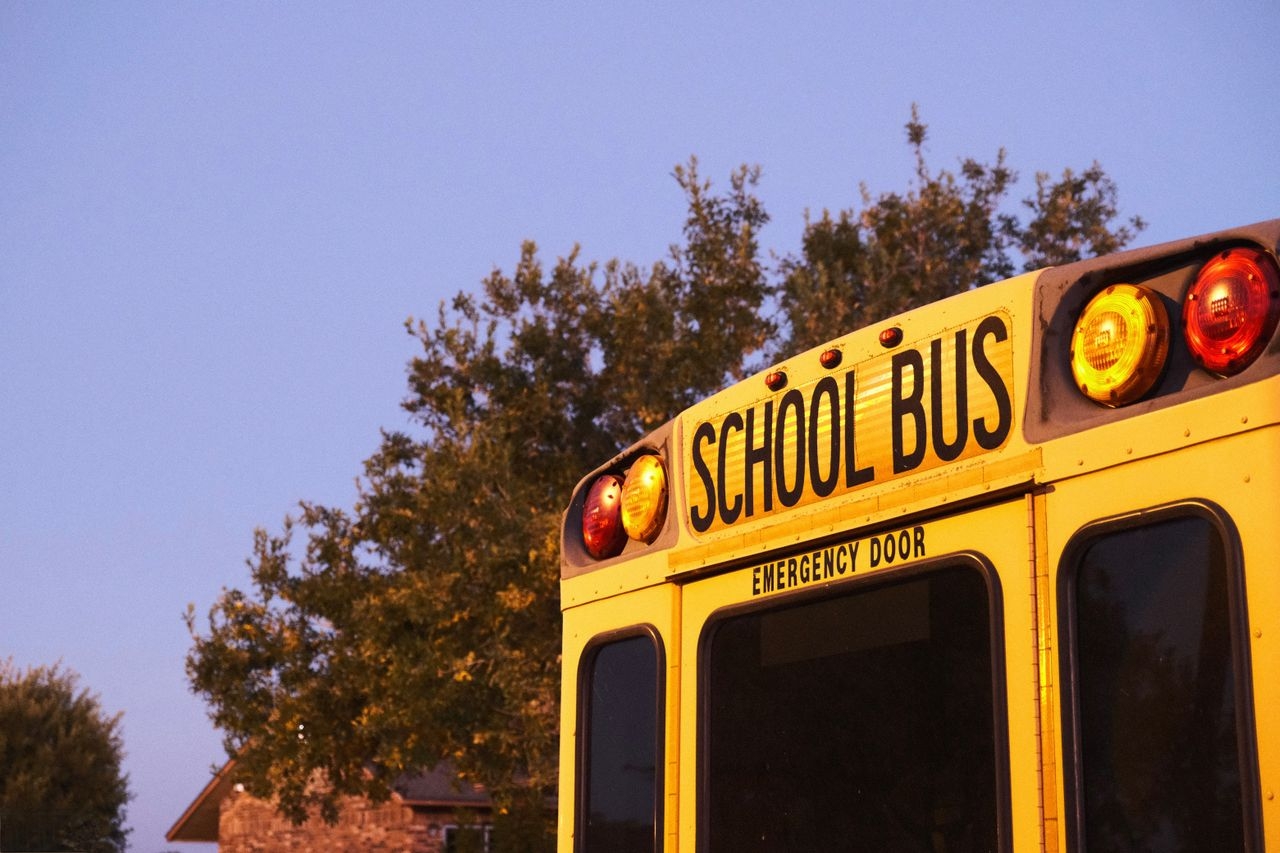
Your child was getting off the school bus, walking toward the curb, or crossing the road after the bus stopped.
The red lights were flashing. The stop arm was out.
Then a driver went past the bus and struck your child.
In the hours and days that follow, your attention is likely on your child’s injuries, medical care, and recovery. But you may also be trying to understand how a driver could pass a stopped school bus and what happens when that decision leaves your child injured.
Pennsylvania has specific rules for drivers approaching stopped school buses. When a child is hit while boarding, exiting, or crossing near a bus, those rules are an important starting point, but they are not necessarily the end of the investigation. How the driver approached the bus, where your child was crossing, what the bus driver was doing, and what video or other evidence exists can all help establish what happened.
What Does Pennsylvania Law Require When a School Bus Stops?
Pennsylvania bus safety law requires a driver approaching a stopped school bus to stop at least 10 feet away when the bus’s red signal lights are flashing and its side stop arm is activated.
The rule applies to drivers approaching from behind, drivers meeting the bus from the opposite direction, and drivers approaching an intersection where a school bus is stopped. There is an exception for opposing traffic when the roadway is separated by certain physical barriers, such as a grassy median, guide rail, or concrete median barrier.
Stopping is not enough if a child is still in danger.
A driver cannot simply start moving once a child has stepped off the bus. Pennsylvania law provides that a driver must not proceed until the flashing red lights are no longer operating, and a driver cannot resume motion until schoolchildren who got off the bus have reached a place of safety.
Those requirements matter because children may need to cross directly in front of a stopped bus, walk across another lane of traffic, or move from the roadway toward a home or sidewalk before they are safely clear.
Does Passing the School Bus Automatically Decide Who Was Responsible?
A violation of Pennsylvania’s school bus stopping law can be significant evidence when determining why a child was hit.
But an injury claim still requires a careful look at how the collision occurred.
Did the driver ignore the flashing red lights? Did the vehicle go around the extended stop arm? Was the driver already trying to pass as the bus came to a stop? Did the driver approach too quickly to stop safely? Was the child visible before the impact?
Those details can help establish whether the driver’s conduct caused the collision.
The driver may also offer a different account. They might say they did not see the bus signals, believed the bus had begun moving again, or did not see the child enter the roadway.
That is why the investigation should not depend solely on what either the driver or the injured child remembers after a frightening event.
Could the School Bus Have Recorded the Driver Who Passed It?
Possibly.
Pennsylvania allows school entities to use automated side stop-arm enforcement systems that record vehicles that illegally pass school buses displaying flashing red lights and an activated stop arm.
If the bus involved in your child’s accident had one of those systems, the recording could provide important information about the vehicle, its movement around the bus, and the timing of the pass.
Other evidence can matter as well.
A school bus may have additional onboard cameras. Nearby homes or businesses may have exterior surveillance. Another parent waiting at the stop may have seen the vehicle approach. Drivers behind the bus may have witnessed the pass or captured it on a dash camera.
Identifying those sources quickly can matter because video can be overwritten and witnesses can become harder to locate as time passes.
What If the Driver Says Your Child Ran Into the Road?
A driver or insurance company may focus on what your child was doing immediately before impact.
They might argue that your child crossed unexpectedly, stepped outside the driver’s line of sight, or did not follow an instruction from the bus driver.
Those allegations should be evaluated against the entire sequence of events.
A stopped school bus with flashing red lights and an extended stop arm is itself a warning that children are boarding, exiting, or crossing nearby. The investigation should therefore consider what the approaching driver could see, the position of the bus, the timing of the signals, the child’s movement, the point of impact, and whether the driver obeyed the stopping requirements.
A child’s conduct is not necessarily judged by the same standard that applies to an adult pedestrian. Pennsylvania law takes a child’s age and capacity into account when evaluating whether the child acted negligently, with different rules and presumptions potentially applying depending on the child’s age and circumstances. That means an argument that your child “ran into the road” does not, by itself, resolve who was responsible for the collision.
Could the Bus Driver or Transportation Provider Also Be Part of the Investigation?
The passing motorist may be the central focus, but some school bus accidents raise additional questions about how the child was being picked up or discharged.
For example, the investigation might need to determine whether the bus stopped at the designated location, whether its red lights and stop arm were activated as required, whether the child was released where expected, or whether something about the bus’s position affected visibility.
Those questions do not mean that the bus driver, school district, or transportation company shares responsibility simply because the child was injured near a school bus.
They matter only if the facts indicate that something on the transportation side contributed to the collision or the child’s injuries.
Who operated the bus also matters. Claims involving a public school district can be subject to Pennsylvania’s governmental-immunity statute and its statutory exceptions, while claims involving a private school-bus company can involve a different liability analysis.
What Evidence Can Help Show What Happened at the Bus Stop?
A parent may not have seen the collision personally. That does not mean the circumstances cannot be reconstructed.
Evidence can include:
- School-bus stop-arm or onboard camera footage
- Photographs of the roadway, bus stop, intersection, and sight lines
- The vehicle’s damage and point of impact
- Names and contact information for parents, students, neighbors, and other witnesses
- Nearby home or business surveillance footage
- Police reports and identifying information for the driver
- School-bus route, stop, and transportation records when relevant
- Medical records documenting your child’s injuries
- Photographs showing injuries and their progression during recovery
It can also be useful to preserve the clothing, backpack, bicycle, phone, or other personal property involved in the collision if it was damaged.
At Dallas W. Hartman P.C., we can help determine what additional records or recordings may exist and take steps to request or preserve evidence that is not already in your possession.
The goal is not to turn a parent into an accident investigator. It is to preserve information that could otherwise disappear while your attention is understandably focused on your child.
What Should You Do After Your Child Is Hit Near a School Bus?
Your child’s medical needs come first.
If your child has been struck by a vehicle, follow the medical guidance you receive for evaluating and treating the injuries. Keep copies of discharge instructions and records of appointments, diagnoses, activity restrictions, medications, therapy, and other follow-up care.
You can also keep copies of communications from the school or transportation provider and write down what your child tells you about the crash while the events are still relatively fresh.
If you know that a bus camera, nearby surveillance system, or other recording may have captured the collision, identifying that evidence early can also be important.
What matters most is creating an accurate record of what happened and how the accident has affected your child—not trying to determine legal fault on your own.
Was Your Child Hit While Getting On or Off a School Bus in Western Pennsylvania?
When a driver passes a stopped school bus and a child is hit, the immediate concern is the child’s health and recovery. The legal questions often come afterward.
Determining responsibility can require looking closely at the driver’s actions, the school bus signals and position, available video, witness accounts, the child’s movement, and, when the facts warrant it, the role of the transportation provider.
At Dallas W. Hartman P.C., we represent children and families affected by serious accidents throughout Western Pennsylvania. We can investigate how the collision happened, work to identify and preserve important evidence, examine the parties and insurance coverage involved, and explain the legal options available based on the circumstances.
If your child was struck while boarding, exiting, or crossing near a stopped school bus, contact Dallas W. Hartman P.C. to discuss what happened and learn more about the options that may be available to your family.
Disclaimer: Results may vary depending on your particular facts and legal circumstances. The articles on this blog are for informational purposes only and are no substitute for legal advice or an attorney-client relationship. If you are seeking legal advice, please contact our law firm directly.